Join Wattstor’s CCO Kevin Ball as he discusses the state of renewables in the UK — from government progress and business challenges to the rooftop revolution transforming local energy. Discover why solar, wind, and batteries are now the most cost-effective path to net zero, and how businesses can take control of their own clean energy future.
💡Turn This Technology into Financial Security
You are here to learn about onsite renewable technology, but the landscape has shifted. In today’s volatile market, onsite generation is no longer just an engineering solution. It’s the key to accessing smarter energy tariffs that secure your long-term financial stability.
At Wattstor, we treat onsite renewables as the enabler for our Price Protect electricity supply contract. By combining fully funded infrastructure with our smart energy tariff, we don’t just lower your bills, we cap your exposure to price spikes while letting you capture the upside when the market drops.
Read on to understand the technology but keep-in-mind…
The goal is de-risked, low cost electricity.
Renewables, Costs and the 2050 Transition
How is the global shift to renewables shaping the future of energy?
The obvious thing which is talked about far and wide is renewable energy is now the cheapest source of energy. When you couple solar, wind, batteries together, there’s no debate anymore. As we say, the train has left the station, renewables will be the technology of choice for generating the next incremental kilowatt hour of energy.
For businesses and consumers, it’s how does that opportunity get transferred into cost reductions where they can see meaningful reductions in their energy bills because of this transformation? I think that’s the challenge. Can we drive the 2050 targets, the clean energy that the government’s pushing and at the same time drive down the energy bills for business?
Want to dive deeper? Explore how onsite renewables can shield businesses from energy price spikes.
What challenges lie ahead for companies with a net zero target?
If you think about it, the journey to 2050 is basically electrifying our economy. We’re electrifying everything we do. We’ve started with the power system and the government is now realising the challenges are process industries, heat, we have to electrify and decarbonise heat and we have to decarbonise transport, electric vehicles as you can see.
If you imagine you’re a business at the receiving end of this, you see the power system becoming cleaner and more renewables. You’ve got to sort out what you do with your heat generation. Are you going to carry on burning gas? Are you going to shift to electrical heating systems? You’re then looking at your fleet of lorries or vans or your logistics and you’re going to electrify your fleet.
What the Transformation Means for Businesses
The whole renewable journey to 2050 is a holistic impact on businesses across everything they do and that journey has only just begun. Whilst we see the big headlines of the offshore wind farms and the big solar farms going down, businesses have got a long way to go. They’ve only just started to think about how they adapt and if you like how they benefit from this sort of revolution rather than just simply done to by energy being given to them in a new way.
What role should the government play in helping businesses transition to renewables?
I think one of the things we’d like the government to think about more is this. Over the last 30 years, distributed energy — or generation close to the point of consumption — has always been an intellectually and economically compelling argument. But despite that, it’s never really taken off at scale. Large, centralised generation has always dominated as the most economical solution. But with renewables — which are naturally suited to being deployed locally — the picture is changing. We can achieve economies of scale, gain cost efficiencies, and avoid transmitting energy from offshore through expensive grid upgrades. And instead of delivering that power to a business in the West Midlands, that business could simply generate all its own energy onsite.
All those big technologies that are being deployed can be deployed at a local scale at a very efficient cost point for business. That’s the bit we have to do.
Where can we find untapped potential for renewable energy?
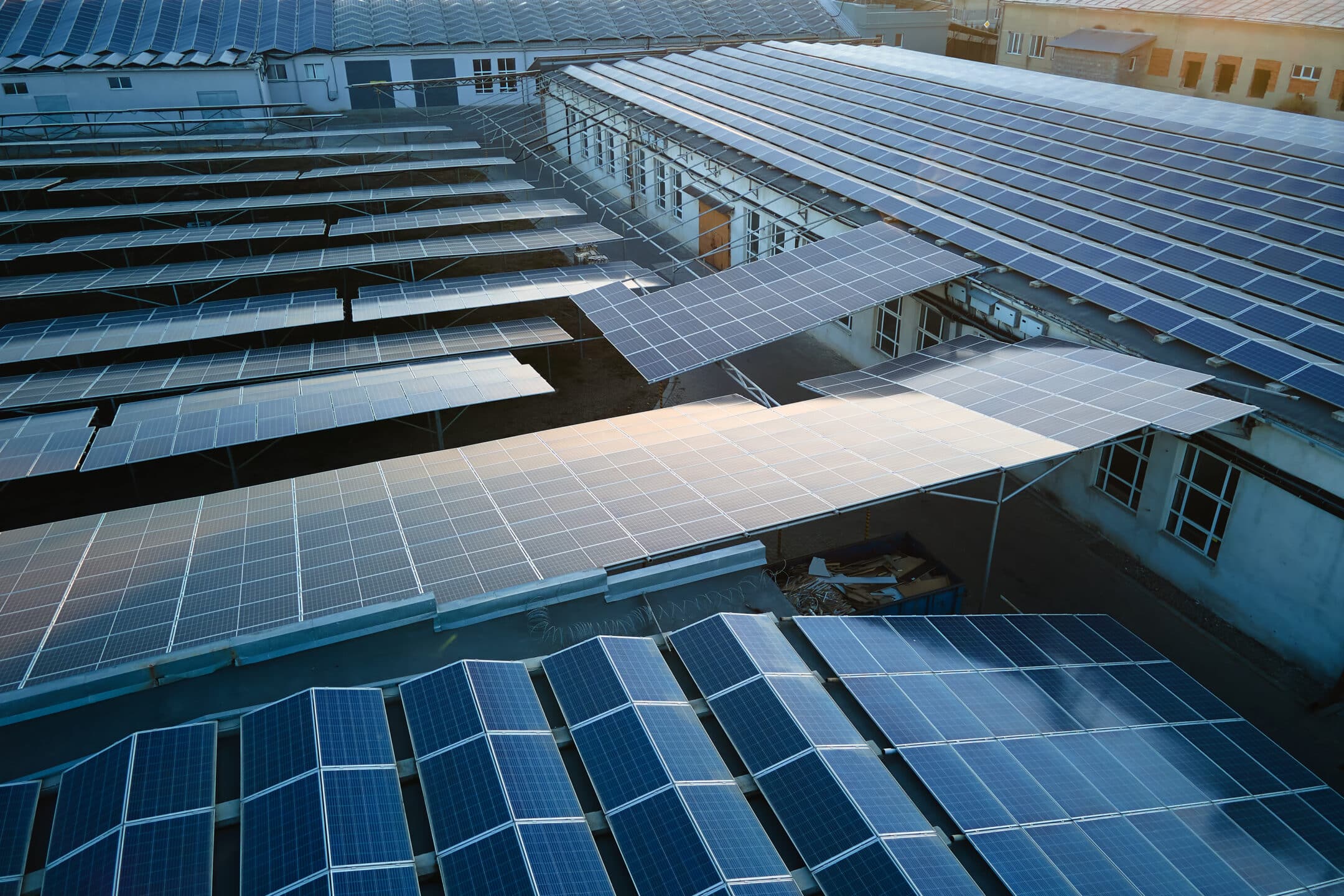
I think I’m looking for a rooftop revolution in the way we use our rooftops in the UK. I mean you’ll see people are putting solar farms down across farmland, large areas of land being covered with solar panels. We have huge untapped resources in commercial industrial rooftops that we could cover with solar at the point of consumption.
Rooftop Solar and the Power of Local Generation
You think about generating a unit of electricity on an offshore wind farm, probably at peak times only about 80% of that energy would reach the consumer. The amount of investment needed to deliver electricity over two or three hundred miles is huge. Localised systems can achieve the same result in a complementary and secure way. Community energy schemes are one option. Communities can work together, and businesses can collaborate on industrial parks. Almost microgrid-type configurations of solar, wind and batteries are definitely the future.
Why is onsite energy storage becoming such a compelling solution for businesses?
It’s the rapid improvement in battery technology for the last 10 years. 10 years ago batteries were coming but they were very expensive and people were not deploying them. In the last five years the price of batteries and the size of the batteries, the physical footprint required to store energy has come down dramatically. When I started at Wattstor, the systems we were putting into our premises of customers that were requiring a 40-foot shipping container to hold the batteries, that was two years ago. We are now down to a 20-foot shipping container to hold the same amount of energy.
We doubled the energy density in the space of two or three years. That progression is expected to continue. Energy storage will become highly competitive as a way of absorbing surplus renewable energy. This will allow the penetration of solar and wind to keep growing at pace and at large scale. At times, these systems will produce excess renewable energy. The energy storage system will absorb that surplus and deploy it at the right time.
Storage, Skills and the Future of Energy Companies
That combination of the price coming down, the energy density improving, and the cost of solar decreasing makes it the obvious choice for new power projects. And as these trends continue, it will remain the go-to option for any future deployment.
What would help a company successfully adopt renewables on their premises?
Yes, to benefit from integrated renewable energy systems, there are a few requirements that we see that the customers we’re looking out for. We’re looking for customers that have a reasonable rooftop area. Many of them have never seen their roof as a valuable asset.
We focus on businesses with a large roof compared to the operations inside the building. We also look for sites with land available around their operations.
Batteries are changing this picture. In the past, a company would be approached by a solar installer or a wind turbine developer. They would calculate how small the project had to be so the customer could consume all the renewable energy inside the factory or warehouse.
What would happen is that most projects were turned down. This was to avoid wasting solar energy in the middle of the summer.
But now we take a different approach. We don’t ask for the smallest system the customer can fully consume. Instead, we look at the largest possible deployment of renewables. In summer, this may be four or five times more than the business is using. We then use the energy storage system to spread that energy through the day. This gives the customer a much higher share of their annual energy consumption made locally.
What changes can we expect in the renewable energy industry over the next decade?
The growth of the renewable industry in the next decade is going to be really fascinating because the energy sector has been around a long time. The UK privatized electricity and gas 35 years ago. We have a lot of incumbents who are delivering energy through the existing infrastructure to consumers. But that’s not the same skill set or capability that we have in our generation systems of gas and electricity.
Interested in how policy will shape this transition? Read our article on how the EU Renewable Energy Directive is shaping the future of energy storage.
Why the Energy Transition Demands New Skills and New Investment
We need new skill sets now, we need new engineering expertise to work with customers on their premises to design, install renewable systems, help customers manage the volatility in electricity prices because you can see one of the impacts as we go on this journey is when solar and wind turbines are being deployed. We do have volatile electricity prices during the day, that’s impacting the customers. Customers want advice. They want to know: how do I electrify my fleet? How do I upgrade my electrical supply? I’ve got to get rid of my gas-fired boilers, but I’ve still got to keep my business running — and all of this takes capital.
What is the right answer to this complex challenge we have? That’s where Wattstor comes in and I think you’re going to see a new kind of energy company emerging. You might call it a demand-side utility — an energy company that primarily focuses on customers’ premises. It manages all the risks that large-scale energy systems place on them during this transition, and it ensures that their energy bills are as low as possible. It also protects them from volatility in energy markets and helps keep their business economically sustainable.
Want more expert energy insights?
Subscribe to our YouTube channel or or connect with us on LinkedIn to get the latest interviews, thought leadership and practical advice on onsite renewables, energy storage and smart optimisation.
Know someone who'd be interested in this? Why not share it: