
Recent service disruption at South East Water highlights a growing and uncomfortable truth for the water sector: energy resilience is now operational resilience.
The incident appears to have been triggered by an external power failure at a water treatment site, leading to interruptions in customer supply. Whilst such events are often outside the direct control of water companies, their impacts are increasingly visible, disruptive, and reputationally damaging.
As climate volatility, grid constraints, and infrastructure interdependencies intensify, reliance on a single source of grid power is becoming an unacceptable operational risk.
The Root Issue: Energy Dependency at Critical Assets
Water treatment works are among the most energy-intensive and operationally critical assets in the UK. When grid power is lost, even briefly, treatment processes can shut down, storage can deplete rapidly, and recovery can take hours or days.
Traditional resilience measures, such as diesel backup generation, provide short-term cover but introduce well-understood challenges:
- Fuel supply risk during prolonged outages
- High carbon emissions and air-quality impacts
- Rising costs and increasing regulatory pressure
- Limited operational flexibility
As the sector moves toward net zero and tighter performance expectations, these solutions are becoming less fit for purpose.
How Solar and Battery Storage Could Reduce Impact
One emerging response is the deployment of onsite solar photovoltaic (PV) generation paired with battery energy storage systems (BESS), delivered through long-term, price protected energy models.
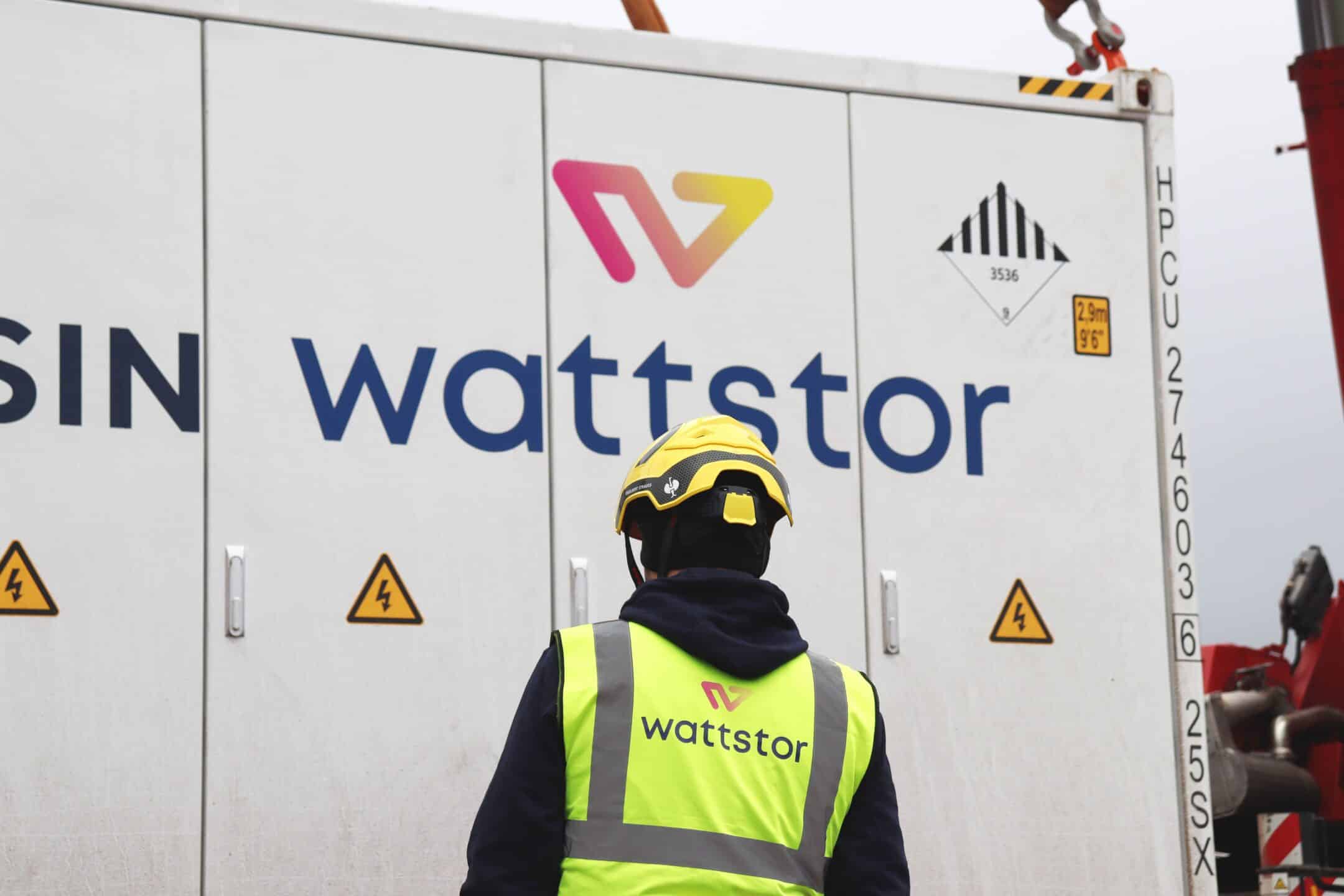
Wattstor & Price Protect
Wattstor designs, owns, and operates onsite solar and battery energy storage systems for critical infrastructure operators under long-term, price-protected energy agreements. Rather than requiring water companies to commit significant upfront capital, Wattstor delivers energy and resilience at a fixed or indexed price over the contract term.
This approach transfers technology, performance, and wholesale market risk away from the utility, while providing predictable operating costs, enhanced resilience, and verifiable carbon reduction.
Crucially, this aligns closely with AMP8 priorities: strengthening operational resilience, reducing exposure to energy price volatility, enabling net-zero delivery, and doing so through capital-light, outcomes-focused solutions that protect customers while maintaining affordability.
What This Means in Practice
- True Energy Resilience
On-site generation paired with BESS allows treatment works to continue operating independently during grid outages. Batteries provide instantaneous response, avoiding interruptions during grid failure or switching events, critical for maintaining continuous treatment processes.
- Predictable and Protected Energy Costs
Price protection shields utilities from volatile wholesale energy markets, improving cost certainty and long-term financial planning.
- Lower Carbon, Lower Operational Risk
Reducing reliance on diesel backup cuts emissions, improves local air quality, and removes fuel logistics risk during extended disruption.
- Operational Flexibility Beyond Emergencies
Outside outage scenarios, battery storage enables peak-shaving, demand management, and participation in flexibility markets, turning resilience infrastructure into a year-round operational asset.
A Strategic Moment for the Water Sector
Recent outage incidents are unlikely to be an anomaly. As energy and water systems become more tightly coupled, failures in one will increasingly cascade into the other.
The strategic question for water companies is no longer whether grid disruptions will occur, but how prepared critical assets are when they do.
Investing in decentralised, price-protected renewable energy solutions, including solar and battery storage, offers a pathway to protect customers, safeguard operations, and future proof essential infrastructure.
Energy resilience is no longer optional. It is foundational to water security.
Know someone who'd be interested in this? Why not share it:
Author

Suresh Nar
Sector Advisor at Wattstor
Non-Executive Water Advisor to Wattstor, Water Sector Lead & Advisory Director at Arcadis, Non-Executive Director at British Water.